
A Prayer for Peace
This was a surprise . . .

The last thing that anyone who knows me would expect from me is an essay about prayer. Let’s face it, I may be the least religious person you know; a self-professed atheist for more than sixty years. I managed to overcome my Southern Baptist underpinnings, and a brief stint as a seminary drop-in and eventually make it to my island refuge of what has always felt to me like something approaching rational thought.
I am not smug about this, like a non-smoking, Prius-driving, Mac user, but I am defensive if someone tries to change my mind. Enough about my credentials. I don’t have any where prayer is concerned, but here’s where I disconnect from my disbeliever ethos.
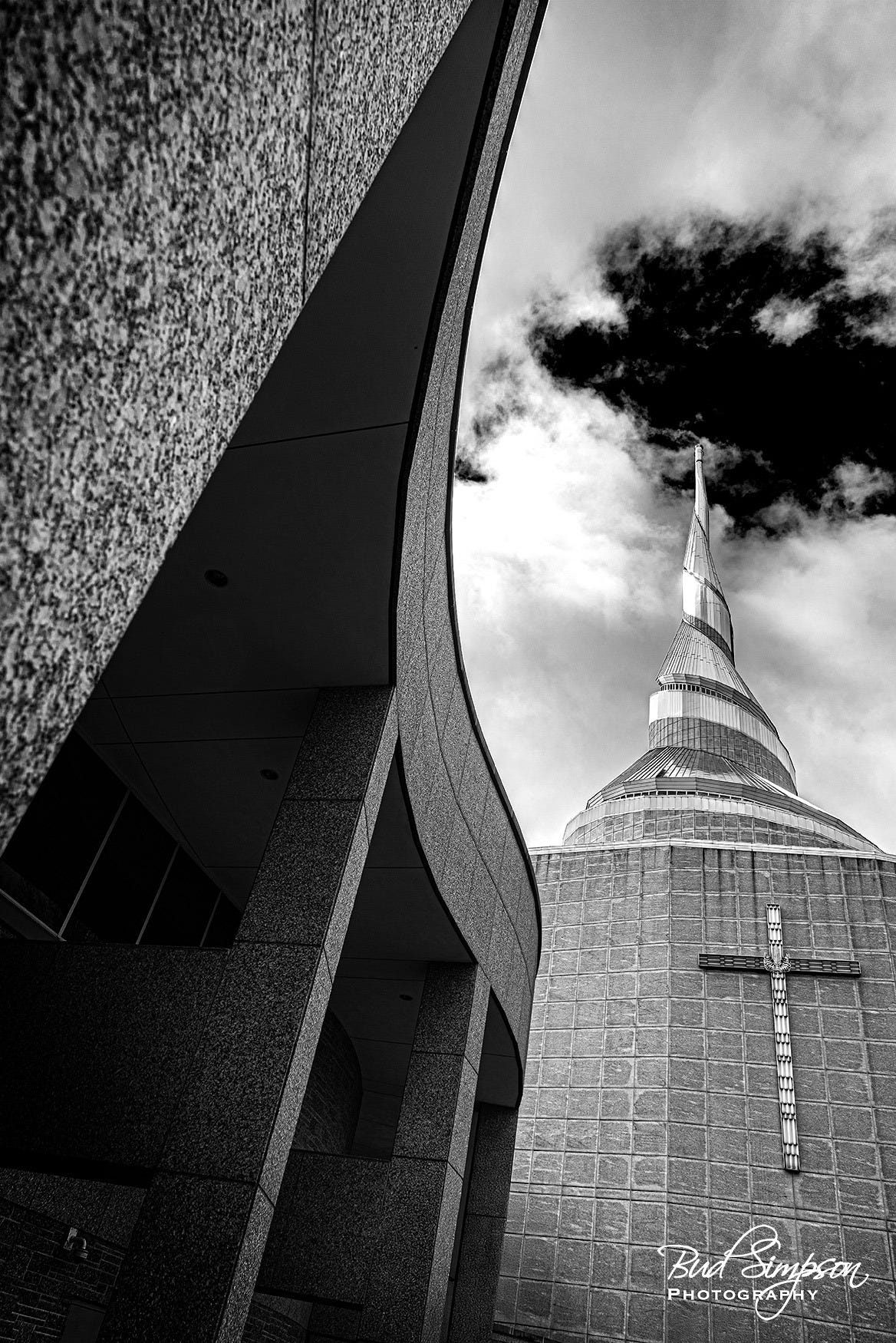
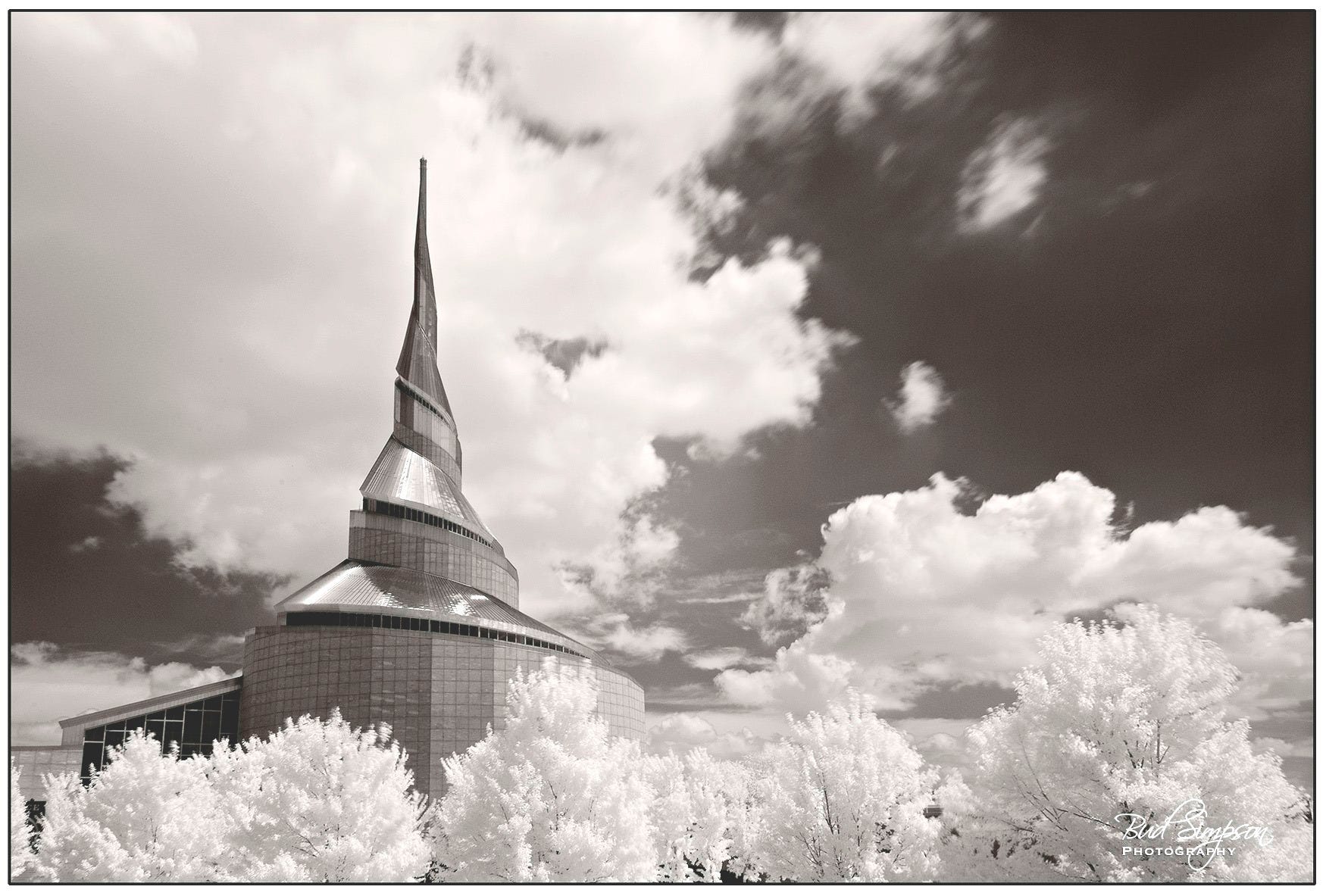
I have a friend who is a recent graduate with a Masters Degree in architecture. On an outing last summer in search of my favorite Kansas City BBQ place, I showed her the Community of Christ Temple in Independence, Missouri, itself a marvel to behold from the outside. She had never seen it before.
The roof of the temple is a complex and convoluted spiral, not unlike a seashell in appearance, a spire that soars to impressive heights above the base of the church. It is wrapped in glistening polished stainless steel.
She was curious about the interior. I tried to describe it - I had been inside several times before for organ concerts - but I knew she really needed to see it for herself. We didn’t go inside that first day, but I discovered that there is a regular daily prayer service - the Prayer For Peace - streamed live on Wednesdays - a brief guided prayer with music and a period of silent prayer and / or meditation.
Video: Prayer for Peace March 18, 2026 for Cyprus
That seemed like a good opportunity to go inside to see the sanctuary and experience the building’s atmosphere first hand.
Perspective: The Community of Christ was formerly known as the Reorganized Church of the Latter Day Saints. It a more liberal and inclusive congregation with Mormon roots.
Wiki: The Community of Christ compared to the LDS Church
The Guardian: Dissatisfied liberal Mormons find refuge in the Community of Christ
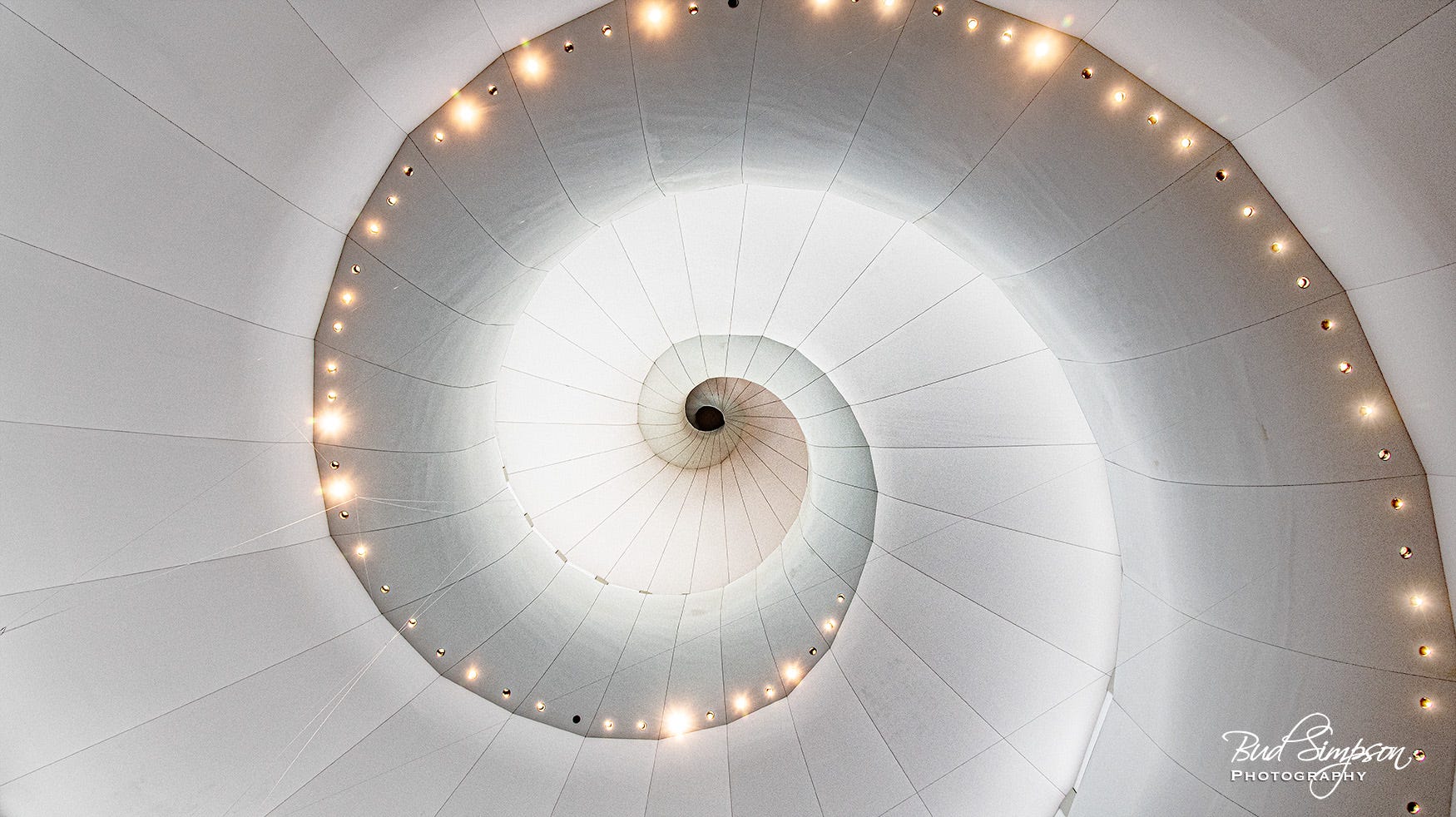
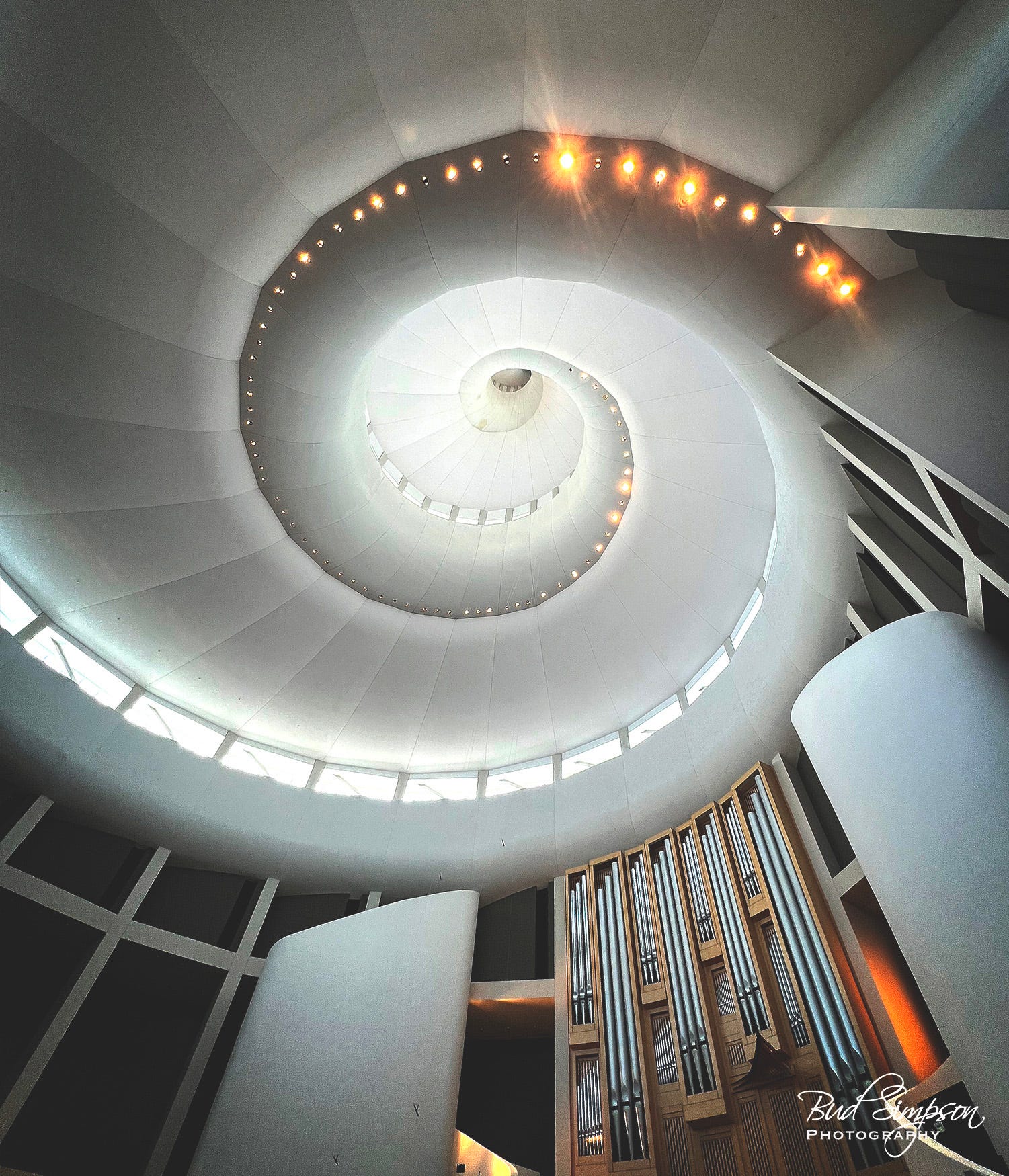
We picked a Wednesday and made the trek to Independence and walked in just a few minutes before the service was to begin at 1:00 p.m. I was immediately struck by how enormous the sanctuary is. The spire reaches incredible heights and the inside is lined with what may be fiberglass cloth or another durable white fabric. The spiral is ringed with lights and clerestory windows follow the Fibonacci curve of the seashell walls.
At the appointed hour, the prayer leader steps to the lectern, and with a small mallet, rings a tubular bell three times three. He or she then produces a lighter and lights a flame to the left of the lectern. The service follows - an invocation prayer and call to action, music from their hymnal, and to me, the most moving part of this service, the call to silent prayer and quiet meditation. The quiet is nearly deafening, interrupted only a couple of times by the prayer leader directing prayer to certain areas of worship.
I am not ashamed to admit that at this service, and at several more that I’ve attended, I’ve been moved, sometimes to tears. While I am admittedly an openly emotional man, I am not sure where this movement comes from - my immediate reaction is that there is such a profound release in this atmosphere of amazing and complete silence that I just let things go. I do not see my reaction as divine influence. Some might.
The service I went to today - video link above - concluded with another musical piece. The service thus completed, and we all went our separate ways, back into the noisy, chaotic, world. I wish I lived closer to the Temple - from my roost up near the airport, it is an easy 25 miles, mostly freeway - a half-hour commute, but I find it worth the drive.
I am however, a practical man. The Temple is just a scant mile and a quarter from my go-to BBQ place. Wouldn’t want to miss an opportunity for BBQ, right?

Peace,

Thanks Bud. I never knew.
Silence, BBQ, and, maybe one day, world peace. I loved this essay, Bud.